

 Speak with our front desk now • Same-day appointments available: (202) 543-2020
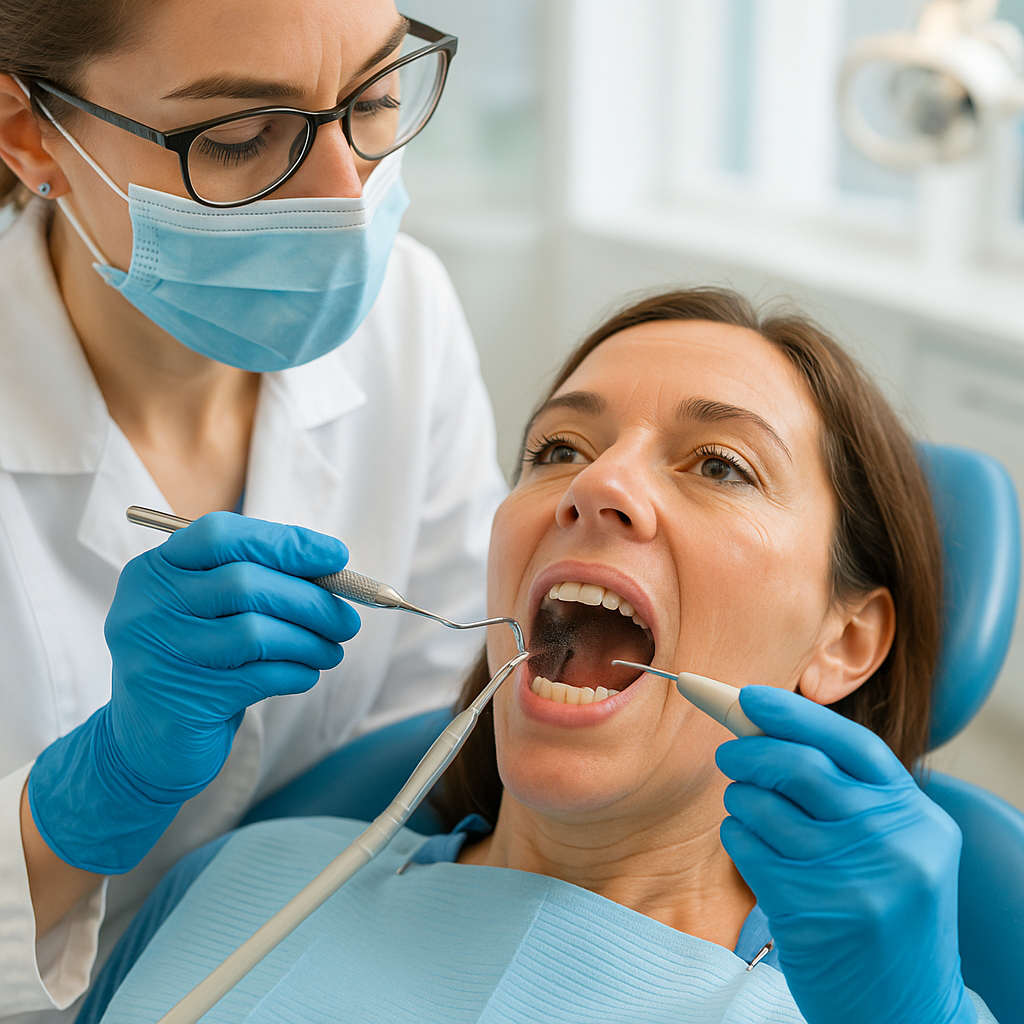
Full Mouth Debridement (FMD) is a dental procedure performed to remove heavy plaque and calculus (tartar) from above and below the gum line, when a patient has not seen a dentist in a long time and the deposits are too thick to allow an accurate exam or cleaning.
At Capitol Hill Dental Arts, we assess the condition of a patient’s gums during the initial comprehensive exam. When patients have not had a regular dental check up in over six months and are not maintaining good brushing habits, it leads to lots of generalized visible buildup of tartar and calculus on the teeth. This buildup also causes the gums to be swollen and bleeding.
The first step towards healthy gums and teeth is to remove all of this buildup in order to get to surface of the teeth to clean and polish them. This first step is called a full mouth debridement and is completed using an ultrasonic scaler. Once the heavy build up is removed, we will usually prescribe Chlorhexidine mouthwash to reduce the swelling of the gums. Then we have the patient return in a week to re-assess the gum to see if we can complete a normal dental cleaning. If we discover the presence of gum disease then we recommend deep scaling and root planing.
Benefits of Full Mouth Debridement
- Improves Oral Health: Removes thick layers of calculus, plaque, and bacteria that contribute to gingivitis, periodontitis, and tooth decay.
- Allows Accurate Diagnosis & Examination: Once the teeth and gums are cleaned, the dentist can properly assess the condition of your teeth, check for cavities, gum disease, bone loss, or other issues that were hidden by debris.
- Prevents Progression of Gum Disease: By disrupting bacterial colonies and reducing inflammation, FMD can prevent mild to moderate periodontal disease from advancing.
- Reduces Oral Inflammation & Bleeding: Many patients experience immediate improvement in gum health — less redness, swelling, and bleeding.
- Freshens Breath: Removing the bacterial deposits eliminates odors caused by gum disease and decay.

Full Mouth Debridement Vs Regular Cleaning
| Feature | Full Mouth Debridement (FMD) | Regular Cleaning (Prophylaxis) |
|---|---|---|
| When used? | When there is heavy tartar and plaque buildup, making it impossible to see the teeth & gums clearly | On relatively healthy gums and teeth, or mild plaque/tartar |
| Purpose? | To remove gross deposits and allow for proper diagnosis & further treatment | To maintain oral health and prevent disease in already healthy mouths |
| Scope? | Often the first step before periodontal therapy or additional cleaning | A routine maintenance procedure |
| Difficulty? | More time-consuming, may require more than one visit, sometimes local anesthesia | Usually quick and painless |
| Outcome? | Prepares the mouth for further evaluation & healing | Maintains oral health and prevents disease |
Full Mouth Debridement (FMD) – Frequently Asked Questions
Learn the answers to frequently asked questions about Full Mouth Debridement (FMD):
When is Full Mouth Debridement Recommended?
Typically when:
- The patient hasn’t had a cleaning in years.
- Heavy calculus prevents seeing the tooth and gum margins.
- A normal cleaning (prophylaxis) would not be effective or safe yet.
What to Expect During the Procedure?
- The dentist or hygienist will use ultrasonic scalers and hand instruments to remove large amounts of tartar above and just below the gums.
- The gums may be inflamed and bleed during the process (which is expected if there is disease).
- Usually done in one or two visits, depending on how much buildup exists.
After Procedure Expectations?
- Gums may feel tender, sore, or even a little swollen for a few days.
- Some mild bleeding when brushing/flossing can occur at first.
- Teeth may feel more sensitive to hot/cold, as the buildup that was insulating them is removed.
- A follow-up visit is scheduled to reassess the gums and determine if further treatment (like deep cleaning or periodontal therapy) is needed.
What are the Home Care Tips After FMD?
To help your gums heal and prevent future buildup:
🪥 Brush Twice Daily — Use a soft-bristled brush and fluoride toothpaste.
🦷 Floss Daily — To remove plaque between teeth and below the gumline.
💧 Use an Antibacterial Mouthwash — If recommended, to help reduce bacteria while healing.
🥗 Eat Soft, Nutritious Foods — Right after FMD, avoid crunchy or sticky foods if gums feel sore.
🚰 Stay Hydrated & Avoid Tobacco — Smoking slows healing and worsens gum disease.
🩺 Keep Follow-Up Appointments — The dentist will check your progress and advise next steps (e.g., scaling & root planing if needed).
Visit Us For a Dental Exam & Consultation Today!
If you want to restore your smile with dental implant treatment, request a consultation with Dr. Rastogi online or call our dental office at 202-543-2020. Dental implants can be used alone to replace a single missing tooth or to secure dental bridges and dentures.